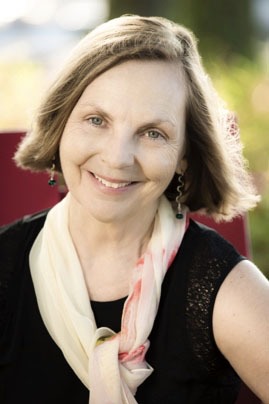
 Interview with Paulette Demers Turco
Award-winning poet and artist Paulette Demers Turco earned her MFA in Writing at Lesley University, Cambridge, MA in 2019. She began writing verse when she learned she would soon be a grandmother. Her first poetry chapbook, ‘In Silence’, was published by Finishing Line Press in 2018 and her first full-length book, ‘Shimmer, an ekphrastic poetry collection’ by Kelsay Books in 2023. She is a member of the Powow River Poets in Newburyport, MA (www.powowriverpoets.com) where she co-organizes their monthly reading program. She is the editor of ‘The Powow River Poets Anthology II (Able Muse Press, 2021).
A retired optometrist, she enjoys being close to family, writing for young people, nature photography and painting. She lives in Newburyport, MA.
------------------------------------------------------------------------------------------------------------------------
Paulette, can you tell us a little bit about your name. Even if it is a combination of two surnames, both names strike me as being unusual.
I am honored and grateful for your interest. “Demers” is a French-Canadian name meaning “of the sea.” I am a second-generation French-Canadian American. My four grandparents were part of the large migration of 900,000 French-Canadians who immigrated from rural Quebec to New England, over the period from 1840-1930 when small farms were increasingly bought up by larger farms after the invention of self-powered agricultural equipment. Advertisements in Quebec by New England textile mills promised jobs and housing while Montreal was suffering with high unemployment. My grandparents’ large families moved near the close of the 19th century. Most settled in Rhode Island, where I was born and grew up, to work in the textile mills or learn a trade. Turco, my name by marriage, is a Sicilian name. The family traces its ancestors back six generations to a small village named Enna near the center of Sicily.
Even though you appear to have come relatively late to the writing of poetry, when did your enjoyment of reading poetry begin and who were your favourite poets in your youth?
I enjoyed reading poetry as a teen in the 1960’s, particularly John Ciardi’s poetry in the Saturday Evening Post, Kahlil Gibran, Elizabeth Barrett Browning, and Robert Frost. I was struck by Shakespeare’s play dialogues written in verse. I took The Prophet, Sonnets from the Portuguese, and some poems by Robert Frost to college with me.
Your first full-length collection, ‘Shimmer’, which is titled as an ekphrastic poetry collection, pairs your poetry with your art. Looking back, which came first: your poetry or your artwork? Does one art form take preference over the other?
You pose an interesting question. For Shimmer, the majority of the poems in this collection were inspired by the art. The pandemic inspired me to pair my art with poetry. As a child, art came first. I loved to draw. My school didn’t offer art classes beyond second grade, but one of my grandfathers, who died when I was six, was an artist who painted mural scenes in a couple of local churches. He is said to have shipped a small oil painting of his of St. George mounted on a white stallion to Pope Pius XII. A great aunt, who was a professional artist, encouraged me to draw during my family’s annual visits. She painted and exhibited her oil paintings in her home. The art changed on every visit as it sold. I rarely penned a poem, maybe for a special occasion. My first dive into creative writing were lullabies or stories for my granddaughter. I put together several books with images and rhymes for her. I then wrote a middle-grade novel and a YA (Young Adult) novel but never approached publishers. I met Rhina Espaillat and switched to poetry.
Observation would have been key to your work as an optometrist when looking after other people’s vision. Do you think that there is anything in your work as an optometrist that equipped you to sharpen your focus when writing poetry?
This is a fascinating question. As an optometrist, to listen, observe, and focus were crucial. I taught ophthalmology residents and examined patients with vision loss in a Boston teaching hospital. My patients, from infants to centenarians, presented with a wide range of experiences, losses, and interests. A third of them were legally blind. I listened, saw resilience, mourned, taught strategies, and prescribed devices to help my patients resume pursuing their interests to restore their independence. I believe that these experiences gave me introductions into many peoples’ lives and challenges. It’s not until I took a class in Newburyport, MA, taught by Rhina Espaillat that I was truly captured by poetry. It’s possible that my previous life experiences were, in a way, practicing for poetry.
Tell us a little bit about your writing process. Do you write try to write every day, for example, and do you have a special place where you like to write? Do you subject your poems to a lot of revision?
I read and write daily. My writing sweet spot is pretty constant: the middle cushion of my living room sofa facing bookshelves of poetry books, intermingled with family photos and artwork. Indirect light streams in from the four long windows facing northwest. Is a poem ever finished? When do I let go? I worked on a sestina for 7 years. It won the Robert Frost Prize in Poetry and, when republished, was nominated for a Pushcart Prize. But that is not a pace that works for most poems. Deadlines work wonders for me. Still, I never submit a first, second, or third draft. Each poem experiences multiple revisions. Even if I believe that what I’ve just written is how the poem should flow, I sleep on it.
For several years you were a regular attender at the annual Robert Frost Farm poetry conferences in Derry, NH. Tell us a little bit about how your attendances there helped you to pursue your writing.
The Frost Farm Metrical Poetry Conference in Derry NH, this year from August 14-16, its 11th year, continues to be an essential commitment for me since its first year. I have attended the conference each year. It is inspiring to be among a group of poets eager to learn and meet poetry-loving writers on Robert Frost’s farm where Hyla Brook burbles. We are in the outdoors under tents for the cooling effect of the shade and protection from sun and rain. The faculty, modified each year, is excellent as is the comradery and inspiration to continually improve my writing.
You read your work extensively at open mic events, bookstores and festivals. In your experience, do certain poems fare better than others when read aloud as opposed to being read in private from the pages of a book?
Definitely. For me, poems I read aloud work best when I as the reader can become the poem: Persona poems, poems of deeply emotional personal experiences, lyrical poems with shorter lines and vivid imagery involving all the senses and play on sound, an interweaving of short and long poems, poems that flow like normal speech with subtle rhythm and rhyme, and poems that speak for themselves and do not need an introduction.
How does the place where you live colour and influence your writing?
Immensely. I live in a densely populated neighbourhood on a one-way street in a small city of 17,000, a block from the mighty Merrimack River, 2 miles from where it meets the Atlantic, beside the Parker River National Wildlife Refuge where shore birds and marsh birds flock, migrating birds stop to fuel up and rest, and birders and nature-lovers follow. Newburyport hosts an annual weekend-long Literary Festival (this year the 21st) which includes a full day of poetry--a poet’s dream. This area is often called the valley of the poets. Large groups of poets and poetry-lovers gather in Newburyport and surrounding towns to share their work. Robert Frost graduated from high school in Lawrence about 45 minutes south and lived just 45 minutes north on his farm in Derry, NH, for many years of his adult life, and where he drew inspiration for much of his poems. Emily Dickinson lived under two hours west in Amherst, MA. Phyllis Wheatley, the first African-American poet, wrote in Boston, 35 miles south.
What reading, other than poetry, is important to your work as a poet, and why?
I believe it is essential to remain abreast of current events. I read the local Daily News and New York Times. I also read books related to my writing and current timely fiction and non-fiction books—though not enough. I need more hours in my day.
What are you working on at the moment and what are your plans for the future?
I am completing a manuscript for my third book of poetry, a full collection of poems about my family and its heritage across several generations. I hope to be ready to seek out publishers by the end of summer. My future plans are to remain active in the poetry community, continually improve my poetry, continue to lead monthly poetry workshops, and complete several manuscripts in progress, including my nature poems of the local area, poems relating to living with vision loss and disability, and migraine. I may do something with a collection of ekphrastic poems. I also look forward to increasing my artwork and combining my art and poetry again. This all requires the gift to live and write and connect with poetry and art as well as art and poetry lovers for many more years.
------------------------------------------------------------------------------------------------------------------------
1950’s Pittsburgh, before He Turns Three
For Paul, a good brother at eight years old
A sunny summer Sunday,
Baby Robby next to me,
Church is over.
Dad’s taking us all for a drive.
Eyes on the hills, we’re singing AB . . . CD . . . E . . .
Fresh air’s blowing our hair,
Grassy fields roll in the breeze,
Horizon’s so far, we see the Allegheny.
I hand Robby a cracker
Just as he starts to fuss.
“Keep him still,” Mom says.
“Let him hold his toys.”
Mom, his face looks funny.
“Never you mind.” She reaches back. “Give him to me.”
One sideways glance from Dad, the car speeds up.
Police sirens scream behind us ’til Dad’s
Quick right into the ER lot.
Robby’s not crying. Dad takes him from Mom,
Slams the door. “Stay here.”
Tears slide down Mom’s cheek.
Under the mirror, Dad’s St. Christopher medal swings.
Very much later, Mom says, “We’re going in.”
We hear a man in a white coat say,
“Extracting it now won’t help him . . . .
You did your best.”
Zooming in, Mom’s arms reach out for Robby, but she collapses.
* * *
After — quiet.
Blame — no one.
Casseroles—fill the fridge.
Death —no one says it.
Eulogy—the pastor reads it.
Funeral—us for Robby.
“God—does not judge.”
“Heaven—holds him.”
I gave him the toy he choked on.
Jailed—at home.
Kept out—alone.
Lost.
Mom bakes bread or stays in bed.
No one asks me.
On my knees, beside my bed,
Praying Our Father, Hail Mary.
Quiet—screams.
“Robby”—no one says.
Suddenly—Robby’s nowhere—everywhere.
“Tragedy”—the pastor says—every Sunday.
Unforgiven—a real sin.
Vision—a Heaven for baby brothers.
Whispers—I keep hearing.
X marks the guilty.
Years—erased. Minutes—years.
Zero chances of bringing him home.
From an abecedarian published in a small-distribution local anthology Voices of the River Bards, 10th Anniversary Anthology, curated by Haverhill River Bards; curators: Andrea Blackington, Daniel Speers, Thomas F. Wylie EdD, distributed by Creative Haverhill, Director--Erin Padilla, (Crowell Editing and Publishing, May, 2026).
|


