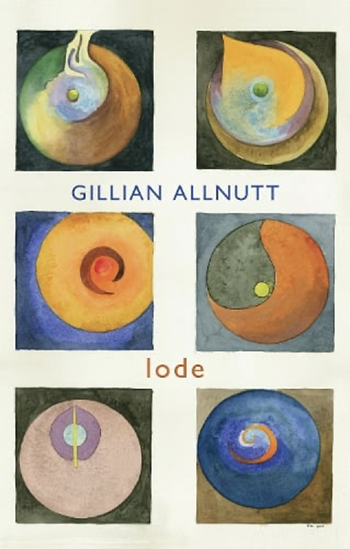
Lode
By Gillian Allnutt
45 poems, 72 pages
Price £12
ISBN: 978-1-780377452
Publisher: Bloodaxe Books
Available from: Amazon
Reviewed by Neil Leadbeater
London-born poet Gillian Allnutt spent half her childhood in Newcastle upon Tyne. In 1988 she returned to live in the North East. Before that, she read Philosophy and English at Cambridge and then spent the next seventeen years living mostly in London. From 2001 to 2003 she held a Royal Literary Fund Fellowship at Newcastle and Leeds Universities. She won the Northern Rock Foundation Writer’s Award in 2005 and received a Cholmondeley Award in 2010. Since 1983 she has taught creative writing in a variety of contexts, mainly in adult education and as a writer in schools. She was awarded The Queen’s Gold Medal for Poetry 2016 and now lives in County Durham.
The ‘lode’ in the title of this collection picks up on a number of definitions which offer many meanings of the word: a course, a way, a journey, a road; a watercourse, a natural or man-made channel, an open drain in fenland; a vein of metal ore etc. Consideration is also given as to its incorporation in longer words such as lodestar: a star that serves as a guide for navigation or, figuratively speaking, a person or thing on which one’s attentions or hopes are fixed; and lodestone which, in a figurative sense, can also mean a thing that is a focus of attention or attraction. There is plenty to think about here.
The collection is divided into three distinct sections titled ‘Postwar’, ‘Lockdown’ and ‘Earth-Hoard’. In the first section there are poems addressed to family and friends and some personal reminiscences of Allnutt’s early days in Northumberland. The final poem in this section, ‘note’, reveals a predilection for wordplay and rhyming sound:
thank you for the little pewter elephant
he is my heart’s content
inlaid mislaid in me like a parent
part of the memory of my mother’s brother’s life unspent
he is christmas past and christmas present
patient as the little doors of advent
as the ancient of days invariant
The second section is centred largely on the former pit village of Esh Winning in Co. Durham, the poet’s home for the last thirty years, and her time spent in lockdown. I was particularly drawn to ‘The walk (allowed)’ which speaks of the consolation that is to be found in nature at such a time. Here the speaker is stilled by ‘First lambs in the field on the far side of the hill…./...The light, alert / and growing.’
In ‘Azuma Meditation’ Allnutt writes of the companionship to be found by courtesy of Zoom. Above all, the strangeness of the whole experience of lockdown is evoked effectively in the opening stanzas of ‘My Garden in Esh Winning’:
The sheep are loud about their lambs
and no cars come.
It’s tea-time
in the small eternity of lockdown.
Nor does the tractor come
in no uncertain terms of trundle-clatter.
Nor do trucks come
shifting down a gear
near the bottom of the garden.
Several lines in this book are informed by scripture. One poem, ‘The way she remembered it’, gives an account of the anointing of Jesus written in the first person singular from the perspective of Mary Magdalene during the Festival of the Passover before his arrest and crucifixion. There are also references throughout the book to music, mythology and other works of literature.
In the final section, ‘Earth-Hoard’, Allnutt’s voice really comes into its own. Many of her poems in this section contain some wonderful lines which reveal a mind of real imaginative power at work. Who could not fail to revel in ‘the dear inconsequential circumlocution’ of the wood-pigeon, or the blue glance of the germander speedwell that is ‘lark-long, half-known, another ounce of song or rain’? These are fine lines indeed.
The inclusion of notes at the end helps to add to our understanding of some of the more cryptic and elusive poems in the earlier part of the book. The ‘lode’ is a journey in time, our time as well as that of the poet. It is also the guidance and solace that is to be found in scripture, the message of the medieval mystics that ‘all will be well’ and the restorative power of the natural world.
This review was previously published in Write Out Loud and is reproduced with kind permission.
|


